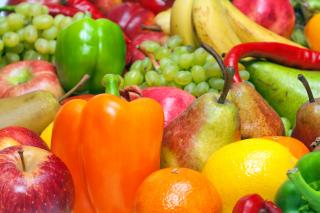
Want to know which food has the biggest impact on your mood? You could be forgiven for saying ‘fish’. We hear a lot about how the omega 3 fatty acids in oily fish are good for depression. and that’s not false – they are.i
But we really hit pay dirt with fruit and vegetables – for both depression and happiness. Studies show that eating more fruit and vegetables is associated with greater happiness across a wide age-group, from teens to men in their nineties.ii But association doesn’t equal cause. It could be that people who feel happy eat a healthier diet (although research hasn’t found this to be the case so far).iii
The more important finding is that eating more fruit and vegetables is followed by greater psychological well-being over time. Not just happiness, but a long list of other positive outcomes increase, including optimism, self-efficacy, quality of life, vitality, flourishing, curiosity, creativity, mental well-being, life satisfaction, engagement, purpose, meaning in life and motivation.iv Which is what we want!
And the good feelings go up the more you eat. Each extra serving increases well-being by a significant amount. But to make a meaningful change in positive emotions a total of seven to eight servings per day are required.v
The impact isn’t small – one study found the change in life satisfaction for changing diet was equal to that of someone who is unemployed finding work, which has a major impact on mental health.vi The impact on well-being of eating fruit and veg is greater than exercise.vii If only chocolate had the same effect, I hear you cry. Good news! One study found that a cocoa supplement increased calm and contentedness compared to no supplement.viii But I think we all knew that already.
Do these foods also pack a big punch for depression? The answer is pretty clear. Eating more fruit and vegetables takes depression down. Along with fiber, this has a greater impact on depression than eating more fish or reducing red meat, fatty meat or cholesterol intake.ix This holds true even when controlling for other factors, such as age, gender, or social and financial circumstances.x Eating a diverse range of vegetables also helps,xi as does eating them raw rather than processed (although processed, such as cooked or tinned, is better than none)xii.
So to sum up – if you want to feel happier, eat more fruit and vegetables, particularly raw. Eat a diverse range with lots of red and orange colors. You can go as high as eight servings a day – the higher you go, the more your mood will benefit. And it works quickly – you’ll feel the impact from as soon as a day later.
iReduces Depression recent Appleton K M, Rogers P J and Ness A R (2010) Updated Systematic Review and Meta-Analysis of the Effects of N− 3 Long-Chain Polyunsaturated Fatty Acids on Depressed Mood, The American Journal of Clinical Nutrition, 91(3): 757-770; Deacon G, Kettle C, Hayes D, Dennis and Tucci J (2017) omega-3 Polyunsaturated Fatty Acids and the Treatment of Depression, Critical Reviews in Food Science and Nutrition, 57(1): 212-223; Hallahan B, Ryan T, Hibbeln J R, Murray I T, Glynn S, Ramsden C E … and Davis J M (2016) Efficacy of Omega-3 Highly Unsaturated Fatty Acids in the Treatment of Depression.,The British Journal of Psychiatry, 209(3): 192-201; Liao Y, Xie B, Zhang H, He Q, Guo L, Subramaniapillai M … and Mclntyer R S (2019) Efficacy of Omega-3 PUFAs in Depression: A Meta-Analysis, Translational Psychiatry, 9(1): 1-9; Lin P Y and Su K P (2007) A Meta-Analytic Review of Double-Blind, Placebo-Controlled Trials of Antidepressant Efficacy of Omega-3 Fatty Acids, Journal of Clinical Psychiatry, 68(7): 1056-1061; Yang J R, Han D, Qiao Z X, Tian X, Qi D, and Qiu X H (2015) Combined Application of Eicosapentaenoic Acid and Docosahexaenoic Acid on Depression in Women: A Meta-Analysis of Double-Blind Randomized Controlled Trials, Neuropsychiatric Disease and Treatment, 11: 2055.
iiEating f/v asscod w greater happiness Blanchflower D G, Oswald A J and Stewart-Brown S (2013) Is Psychological Well-Being Linked to the Consumption of Fruit and Vegetables? Social Indicators Research, 114(3); young people Brookie K L, Best G I and Conner T S (2018) Intake of Raw Fruits and Vegetables is Associated with Better Mental Health than Intake of Processed Fruits and Vegetables, Frontiers in Psychology, 9: 487; Jyvakorpi S K, Urtamo A, Pitkälä K H and Strandberg T E (2018) Happiness of the Oldest-Old Men is Associated with Fruit and Vegetable Intakes, European Geriatric Medicine, 9(5); 687-690; uni students Lesani A, Mohammadpoorasl A, Javadi M, Esfeh J M and Fakhari A (2016) Eating Breakfast, Fruit and Vegetable Intake and their Relation with Happiness in College Students, Eating and Weight Disorders – Studies on Anorexia, Bulimia and Obesity, 21(4): 645-651.
iiiHappier people eat more f/v Tuck N J, Farrow C and Thomas J M (2019) Assessing the Effects of Vegetable Consumption on the Ppsychological Health of Healthy Adults: A Systematic Review of Prospective Research, The American Journal of Clinical Nutrition, 110(1): 196-211.
ivMore f and v leads to greater happiness over time Conner T S, Brookie K L, Richardson, A.C and Polak M A (2015) On Carrots and Curiosity: Eating Fruit and Vegetables is Associated with Greater Flourishing in Daily Life, British Journal of Health Psychology, 20(2): 413-427; Conner T S, Brookie K L, Carr A C, Mainvil L A and Vissers M C (2017) Let Them Eat Fruit! The Effect of Fruit and Vegetable Consumption on Psychological Well-Being in Young Adults: A Randomized Controlled Trial, PloS One, 12(2): e0171206; ADVentist church Ford P A, Jaceldo-Siegl K, Lee J W, Youngberg W and Tonstad S (2013) Intake of Mediterranean Foods Associated with Positive Affect and Low Negative Affect, Journal of Psychosomatic Research, 74(2): 142-148; Głąbska D, Guzek D, Groele B and Gutkowska K (2020) Fruit and Vegetable Intake and Mental Health in Adults: A Systematic Review, Nutrients, 12(1): 115; Mujcic R and J Oswald A (2016) Evolution of Well-Being and Happiness after Increases in Consumption of Fruit and Vegetables, American Journal of Public Health, 106(8): 1504-1510; Ocean N, Howley P and Ensor J (2018) Lettuce Be Happy: The Effects of Fruit and Vegetable Consumption on Subjective Well-Being in the UK, Leeds University Business School Working Paper, (18-12); Tuck N J, Farrow C and Thomas J M (2019) Assessing the Effects of Vegetable Consumption on the Ppsychological Health of Healthy Adults: A Systematic Review of Prospective Research, The American Journal of Clinical Nutrition, 110(1): 196-211; White B A, Horwath C C and Conner T S (2013) Many Apples a Day Keep the Blues Away – Daily Experiences of Negative and Positive Affect and Food Consumption in Young Adults, British Journal of Health Psychology, 18(4): 782-798.
v F/v greater than exercise Tuck N J, Farrow C and Thomas J M (2019) Assessing the Effects of Vegetable Consumption on the Ppsychological Health of Healthy Adults: A Systematic Review of Prospective Research, The American Journal of Clinical Nutrition, 110(1): 196-211.
viImpact of f/v on life satisf as great as finding work Mujcic R and J Oswald A (2016) Evolution of Well-Being and Happiness after Increases in Consumption of Fruit and Vegetables, American Journal of Public Health, 106(8): 1504-1510.
vii F/v greater than exercise Tuck N J, Farrow C and Thomas J M (2019) Assessing the Effects of Vegetable Consumption on the Ppsychological Health of Healthy Adults: A Systematic Review of Prospective Research, The American Journal of Clinical Nutrition, 110(1): 196-211.
viiiCocoa calm contentedness Pase M P, Scholey A B, Pipingas A, Kras M, Nolidin K, Gibbs A … and Stough C (2013) Cocoa Polyphenols Enhance Positive Mood States but not Cognitive Performance: A Randomized, Placebo-Controlled Trial, Journal of Psychopharmacology, 27(5): 451-458, in Bear T L K, Dalziel J E, Coad J, Roy N C, Butts C A and Gopal P K (2020) The Role of the Gut Microbiota in Dietary Interventions for Depression and Anxiety, Advances in Nutrition, 11(4): 890-907.
ixMore fruit and veg lead to less depression Blanchflower D G, Oswald A J and Stewart-Brown S (2013) Is Psychological Well-Being Linked to the Consumption of Fruit and Vegetables? Social Indicators Research, 114(3): 785-801; Brookie K L, Best G I and Conner T S (2018) Intake of Raw Fruits and Vegetables is Associated with Better Mental Health than Intake of Processed Fruits and Vegetables, Frontiers in Psychology, 9: 487; Carr A C, Pullar J M and Vissers M C (2013) Beating the Blues -The Association between Fruit and Vegetable Intake and Improved Mood, The New Zealand Medical Journal, 126: 131-132; Ford P A, Jaceldo-Siegl K, Lee J W, Youngberg W and Tonstad S (2013) Intake of Mediterranean FoodsAssociated with Positive Affect and Low Negative Affect, Journal of Psychosomatic Research, 74(2): 142-148; Głąbska D, Guzek D, Groele B and Gutkowska K (2020) Fruit and Vegetable Intake and Mental Health in Adults: A Systematic Review, Nutrients, 12(1): 115; Huang Q, Liu H, Suzuki K, Ma, S and Liu C (2019) Linking What we Eat to our Mood: A Review of Diet, Dietary Antioxidants and Depression. Antioxidants, 8(9): 376; Liu X, Yan Y, Li F and Zhang D (2016) Fruit and Vegetable Consumption and the Risk of Depression: A Meta-Analysis, Nutrition, 32: 296–302; McMartin S E, Jacka F N and Colman I (2013) The Association between Fruit and Vegetable Consumption and Mental Health Disorders: Evidence from Five Waves of a National Survey of Canadians, Preventive Medicine, 56(3-4): 225-230; Opie R S, O’Neil A, Itsiopoulos C and Jacka F N (2015) The Impact of Whole-of-Diet Interventions on Depression and Anxiety: A Systematic Review of Randomised Controlled Trials, Public Health Nutrition, 18(11): 2074-2093; Tuck N J, Farrow C and Thomas J M (2019) Assessing the Effects of Vegetable Consumption on the Ppsychological Health of Healthy Adults: A Systematic Review of Prospective Research, The American Journal of Clinical Nutrition, 110(1): 196-211.
xImpact of f/v holds true controlling for other factors Blanchflower D G, Oswald A J and Stewart-Brown S (2013) “Is Psychological Well-Being Linked to the Consumption of Fruit and Vegetables?” Social Indicators Research, 114(3); McMartin S E, Jacka F N and Colman I (2013) The Association between Fruit and Vegetable Consumption and Mental Health Disorders: Evidence from Five Waves of a National Survey of Canadians, Preventive Medicine, 56(3-4): 225-230; 225-230; Tuck N J, Farrow C and Thomas J M (2019) Assessing the Effects of Vegetable Consumption on the Ppsychological Health of Healthy Adults: A Systematic Review of Prospective Research, The American Journal of Clinical Nutrition, 110(1): 196-211.
xiDiverse range of veges Parletta N, Zarnowiecki D, Cho J, Wilson A, Bogomolova S, Villani A, Itsiopoulos C, Niyonsanga T, Blunden S, Segal L et al (2019) A Mediterranean-Style Dietary Intervention Supplemented with Fish Oil improves Diet Quality and Mental Health in People with Depression: A Randomized Controlled Trial (HELFIMED), Nutritional Neuroscience, 22: 474–487.
xiiRaw rather than processed Brookie K L, Best G I and Conner T S (2018) Intake of Raw Fruits and Vegetables is Associated with Better Mental Health than Intake of Processed Fruits and Vegetables, Frontiers in Psychology, 9: 487.
 It worries me that people are so distressed about BREXIT. Some people are going beyond angst to clinical anxiety and depression. So I’ve compiled a list of things you can do, say/think and read that might make you feel better. And once you feel better, you’ll be more able and motivated to take action to help get Britain to a better place. If you want to!
 Man’s Search for Meaning by Viktor Frankl. An inspiring memoir of how one man coped in a concentration camp in World War 2, in solitude, cold and hungry. He took power over his thoughts and refused to let his circumstances control him.
 people who have had bad things happen to them, and then found that the setback or disappointment they suffered actually led to a better outcome. It could give you hope that Brexit could lead to a good outome for Britain, or that your own life could end up getting better.
 haved so oddly for so long that I had only one friend left. She didn’t last a year after we both started work. She got fed up with my depressions, my self-hatred and my new solution –alcohol.
 Then two unexpected things happened. First I fell in love with a woman, not for the first time. Second, I went crazy.
 Finally the meds kicked in, after two weeks of indescribable suffering. I had a shower, got dressed, started doing the shopping for the family, doing the crossword, going out. My sister would say to me ‘come on zombie’, not unkindly, and take me for a walk, like a silent and dejected dog. I wasn’t happy, but I was functioning.
 Luckily, therapy helped. I started to do more, go swimming, go for walks on my own, encouraged by my therapist. Then I took a trip that changed my life. It took all of half an hour, from where my parents lived in the ‘burbs to my old university in the middle of the city.
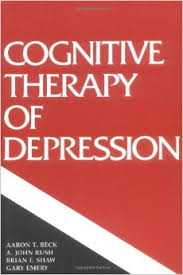 Next I read Cognitive Therapy of Depression and started using the thinking and behavioral techniques it taught. I fired my lovely neo-Freudian therapist and signed on with a clinical psychologist. Then something amazing happened.
 So that’s the end of my story. I was cured and have been happy ever since.
 I staggered through to my 30th birthday having one relapse after another. Even in the good patches I wasn’t as happy as I had been after my big breakdown. I was starting to suspect that tricyclic antidepressants and Cognitive-Behavioral Therapy (CBT) were not the cures they were touted to be. I was starting to suspect I’d need more.



 he things that used to work didn’t work anymore. I was back to driving while screaming and crying, back to dangerously longing to kill myself, back to calling emergency helplines in desperation and fear I would try again to take my own life.
 Except that it didn’t happen. Somehow all those years of trying things out, monitoring my moods, adding new tools to the toolkit, and using the tools that worked best for me on a daily to weekly basis had made me almost bullet proof. I had lost a lot, but I retained my most precious possession – happiness.
 I had the odd scary day when I desperately, dangerously longed for death. But again, I did all the things that worked for me, and those days passed too. But most of the time I was happy, even when I was bedridden for days on end.

 I developed a Suicide Prevention Plan where I identified triggers and stressful situations, listed warning signs and what I would do about them, and signed off on it with my therapist, doctor, friends and family.
 kayemclaren.com